You need 250,000 Spotify Streams to Make Rent. Here's What Smart Artists Do Instead
The streaming era made music feel infinite. It made artist income feel fractional. But there's a fix — and most artists have no idea it exists.
Sabrina
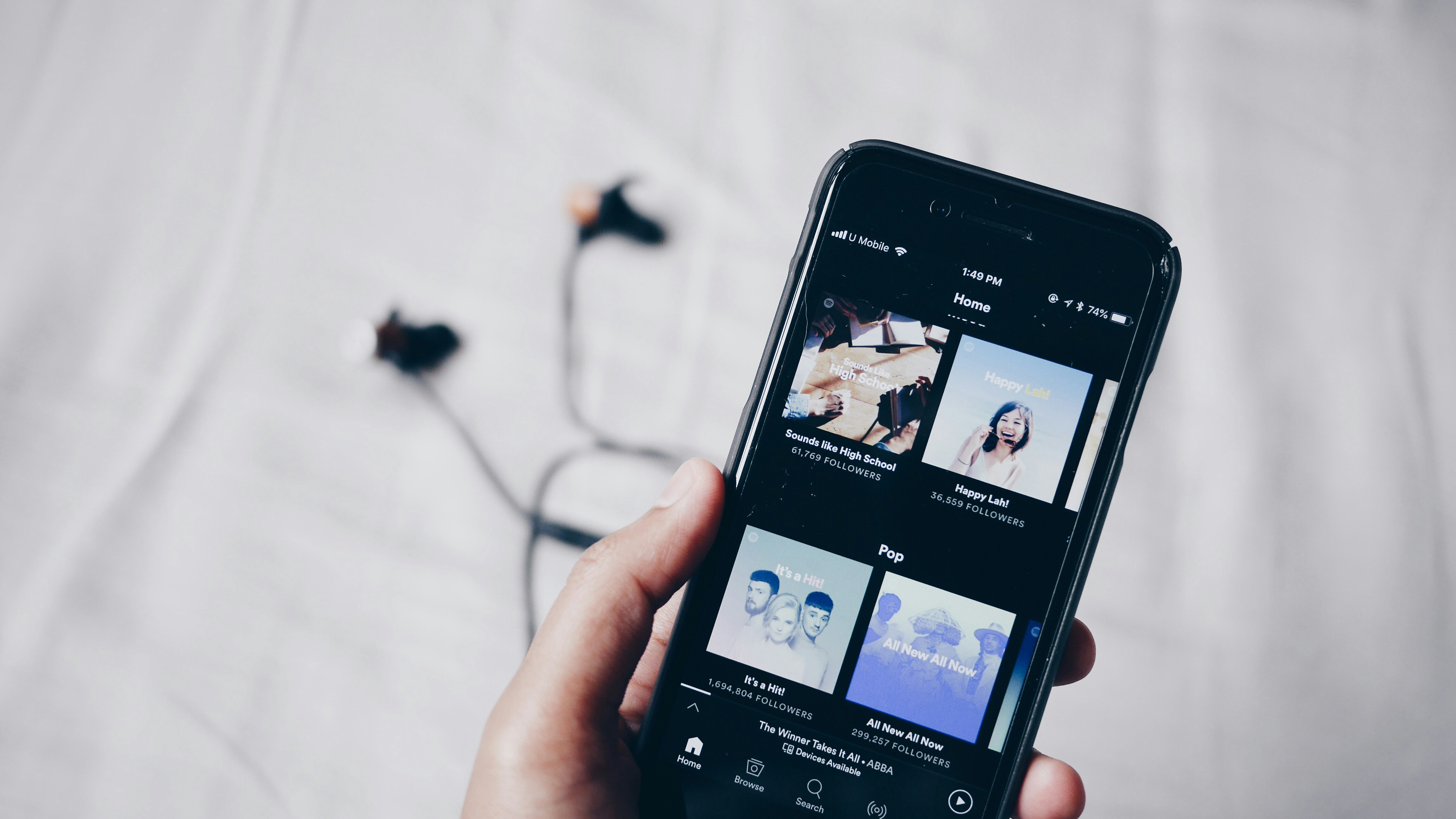
You could have 100,000 monthly Spotify listeners, more than most artists ever see, and still be making around $1,200 a month before your distributor takes their cut.
That's not a music career. That's a part-time job at a coffee shop, minus the free espresso.
The streaming era sold artists and fans the same dream: music everywhere, all the time, for everyone. And it delivered, for listeners. For the people actually making the music? The math never added up. And right now, in 2026, it’s getting worse.
But here's what the industry won't tell you: the artists building real income aren't beating the algorithm. They're ignoring it, and collecting checks most musicians don't even know exist.
The Promise Versus the Payout
When streaming took over, it felt like a win. No more piracy. No more hoping someone walked into a record store. Your music, available to everyone, forever.
What nobody put in the fine print: available and profitable are two completely different things.
Spotify pays between $0.003 and $0.005 per stream on average. That means you need roughly 250,000 streams to make $1,000. Not per song, total. And that’s before your label, distributor, or co-writer gets their share.
It gets worse. Over 100,000 new tracks are uploaded to Spotify every single day. More songs competing for the same royalty pool means each track’s individual cut keeps shrinking. AI-generated music has poured fuel on that fire. The platforms have tried to filter the flood, but the math is the math. More denominator. Smaller slice.
This isn’t Spotify being evil. It's a structural problem baked into how streaming was built. The industry created a model where scale benefits the platform and the top 1% of artists, and everyone else is left chasing streams that don't convert to survival.
Why Going Viral Isn’t the Play
The cultural mythology around music success goes like this: one song blows up, the streams pour in, the money follows.
That's not what the data shows.
An artist with 80 songs averaging 3,000 streams each per month earns roughly the same as an artist with one viral song sitting at 240,000 monthly streams. But the catalog artist's income doesn't disappear when the algorithm moves on. It compounds. It stabilizes. It survives.
Streaming platforms are also quietly rewarding depth over moments, because an artist with 80 songs keeps listeners on the platform longer. The algorithm isn't just about popularity. It’s about retention. And artists who understand that are building libraries instead of betting everything on a single release.
Going viral is a lottery ticket. Building a catalog is a business.
The Money You’re Leaving on the Table
Most independent artists are registered with a distributor. Some are registered with a PRO, a performing rights organization like ASCAP or BMI that collects royalties when your music is played publicly. That’s the baseline.
But there's a second registration most artists don't know about: The MLC, the Mechanical Licensing Collective. It’s a nonprofit set up in 2021 specifically to collect and pay out mechanical royalties from streaming.
Every time someone streams your song, there are two types of royalties generated: the master recording royalty (what your distributor collects) and the mechanical royalty (what The MLC collects and distributes).
If you’re not registered with The MLC, your mechanical royalties are sitting in a pool of unmatched funds, money that’s been paid by Spotify, Apple Music, and every other DSP, waiting for the right artist to claim it.
The number? Industry estimates put uncollected mechanical royalties in the tens of millions of dollars annually. And the artists owed that money are mostly independents who didn’t know to sign up.
That's not a streaming problem. That’s a paperwork problem, and it has a solution.
Step 1: Register at themlc.com. It’s Free and takes 20 minutes.
Step 2: Register every song you've distributed, with the correct ISRC codes.
Step 3: Check your distributor’s reporting to confirm mechanical royalties are being tracked separately from master royalties.
Artists registered with both a PRO and The MLC collect 15-30% more income from the same streams. Same music. Same plays. More money, just because they filled out the right forms.
The Other Check Nobody’s Chasing: Sync
If mechanical royalties are the industry's best-kept secret, sync licensing is the one that can actually change your financial life.
Sync is when your music gets licensed for use in TV shows, films, ads, video games, or content platforms. A single sync placement, one scene, one ad, can pay anywhere from a few hundred dollars to tens of thousands, depending on the project and usage rights.
The streaming math for that kind of payday? You’d need millions of plays.
Independent artists have a real opening here. Major label artists come with approval chains, rate cards, and legal departments. An indie artist can say yes faster, negotiate directly, and often offers more flexibility on licensing terms. Music supervisors, the people who pick songs for shows and films, know this. Many actively seek out independents.
The barrier isn’t access. It’s visibility and preparation.
Getting into sync means: registering your music with a sync licensing platform (Artlist, and Musicbed are good starting points), making sure you own 100% of your master and publishing rights (split rights kill sync deals), and having clean metadata, because if a music supervisor can't tell who owns what, they’ll move to the next track.
One placement in a mid-tier Netflix show. One ad for a regional brand. One video game background track. That's rent money, from music you already made.
The Streaming Era Made Music Infinite.
The labels and platforms built a model optimized for volume and scale. The artists adapting to it aren’t trying to out-volume the machine.
They're building catalogs instead of chasing moments. They’re collecting royalties the system already owes them. They’re licensing their music to screens and speakers where algorithms don't decide who gets paid.
Streaming is the billboard. The check comes from everywhere else.
The music industry didn’t break the deal. It just never offered the one artists thought they were signing up for. The artists building real careers in 2026? They read the fine print, and wrote their own contract.
Register with The MLC at themlc.com. Free. Takes less time than your last EP.