Who’s Actually Cashing In Every Time a New “Core” Trends
You didn’t discover cottagecore. Somebody sold it to you.

Sabrina
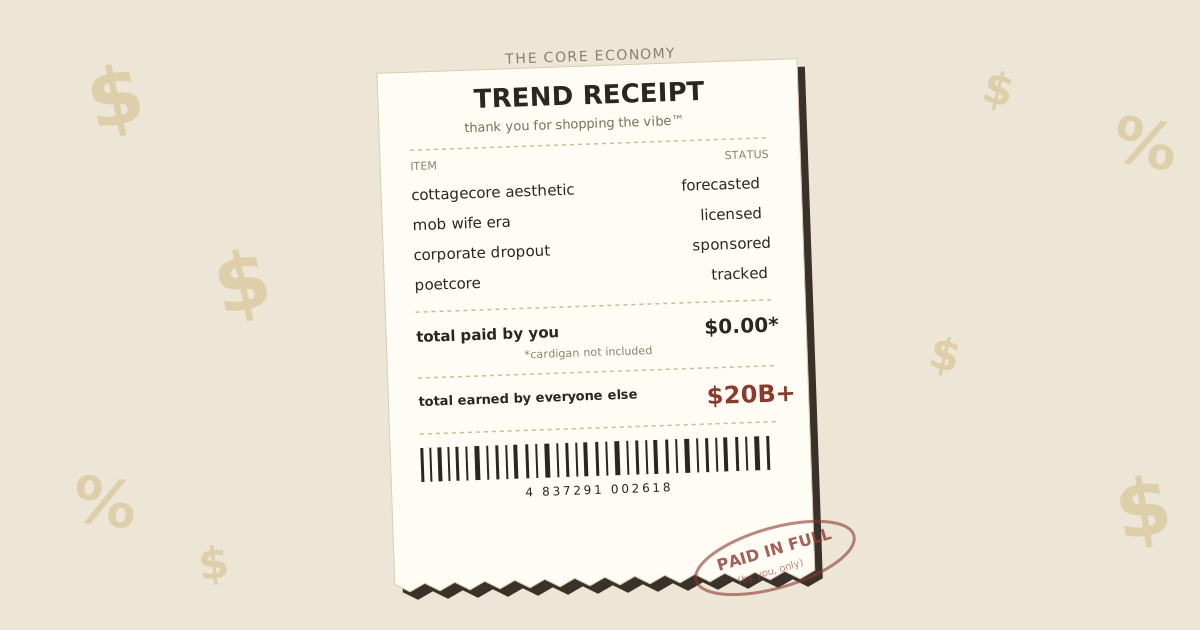
Before you ever felt the pull toward gingham dresses and a sourdough starter, that feeling had already been spotted, named, and licensed to three different companies. You just got there last, and you're the only one in the chain who paid full price.
That's the part nobody puts in the moodboard. Cottagecore, mob wife, corporate dropout, whatever’s next, every “core” has a business model running quietly underneath it. Forecasters sell the data. Brands buy the keyword. Creators farm the hashtag. By the time a vibe reaches your feed, it’s already changed hands two or three times. Here's the receipt.
The forecasters saw it first
Before “mob wife” ever hit your feed, it hit a spreadsheet.
Pinterest and Canva publish entire trend reports a year out, tracking search spikes down to the percentage point, then sell that intel to brands before the rest of us have even heard the term.
Pinterest flagged a 175% jump in searches for “the poet aesthetic” months before poetcore showed up in your comments, right alongside smaller but real spikes in lace nails (up 215%) and brooches. Canva clocked a 220% jump in liminal and uncanny aesthetic searches, and a 527% spike in “lo-fi aesthetic” alone.
None of that is organic. It’s a forecasting industry built to spot a vibe before it has a name, package it, and sell the insight to whoever pays first. You’re not early to a trend. You’re late to a memo you never saw.
Then the hashtag becomes a storefront
Once a core has a name, the second business model kicks in: affiliate. And this isn't some niche side hustle, the global affiliate market is on track to clear $20 billion in 2026, creator-driven affiliate revenue has crossed $1.1 billion and is growing 71% year over year, and TikTok Shop alone is projected to hit $23.4 billion in U.S. sales this year, up 48%.
You’ve felt this without naming it.
The “get the look” link under a cottagecore haul.
The “shop my mob wife fit” carousel.
The Etsy seller riding a keyword spike she didn’t start but absolutely cashed in on. Every click pays someone a commission, and brands keep funding it because it works: affiliate returns $12 to $15 for every $1 spent. That’s why half your favorite creators have quietly become unpaid sales reps for an aesthetic that pays them, not you.
Name your core, trace the money
Take mob wife. It spiked alongside true-crime fatigue and a string of leopard-print runway moments, and within weeks, “mob wife aesthetic” was its own searchable shopping category, with affiliate carousels stacking faux fur, gold hoops, and red lipstick under one tidy link-in-bio.
Nobody coordinated that. They didn’t need to. The minute a forecaster’s dashboard showed the spike, every affiliate network plugged into that data started auto-suggesting the same products to thousands of creators at once.
Corporate dropout works the same way, just with a different buyer. The aesthetic, loosened blazers, ironic button-downs, “I know the rules, I just don’t care” energy, reads like a rebellion against hustle culture.
But burned-out professionals didn't invent the term; fashion media and trend forecasters slapped a name on a thing they'd already clocked as a moodboard pattern, then watched workwear brands quietly retool their fall lines around it.
Poetcore is the cleanest case of all, because the receipt is published in plain sight: a 175% jump in searches for “the poet aesthetic,” tracked, reported, and handed to brands months before the rest of us started buying loose knits and notebooks to look pensive.
Three different cores, three different vibes, same supply chain underneath every single one.